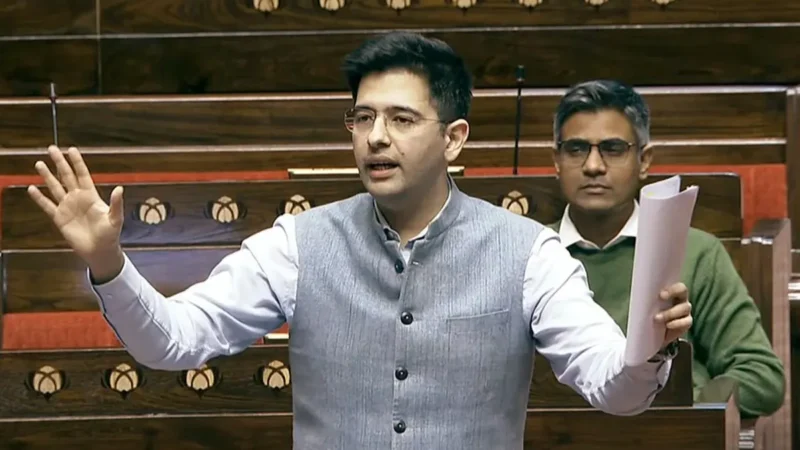
In a major political development that could reshape the dynamics of the Rajya Sabha, Raghav Chadha has officially announced his decision to leave the Aam Aadmi Party (AAP) and join the Bharatiya Janata Party (BJP). The announcement, made on April 24, 2026, signals not just an individual move but a large-scale political shift involving multiple Members of Parliament.
According to Chadha, two-thirds of AAP’s 10 Rajya Sabha MPs are part of this transition, making it a significant merger rather than a simple defection. This development comes as a major setback for AAP, especially in the Upper House, where numbers play a crucial role in influencing legislative decisions.
Key Leaders Who Made the Switch
The list of leaders joining BJP reflects the scale and seriousness of this political change. Apart from Raghav Chadha, key figures such as Sandeep Pathak and Ashok Mittal are among the primary movers in this transition.
In addition, notable names like Harbhajan Singh, Vikram Sahney, and Swati Maliwal have also been associated with this shift, further highlighting the breadth of support behind the move.
This is not a minor rebellion but a coordinated decision involving leaders from diverse backgrounds, including politics, sports, and social activism. The presence of such high-profile individuals adds weight to the development and indicates that the dissatisfaction within AAP may be deeper than previously understood.
Also Read – CSK Demolish MI at Wankhede: Chennai Register Historic Win, Mumbai Indians in Trouble
Biggest Twist: Ashok Mittal’s Sudden Exit
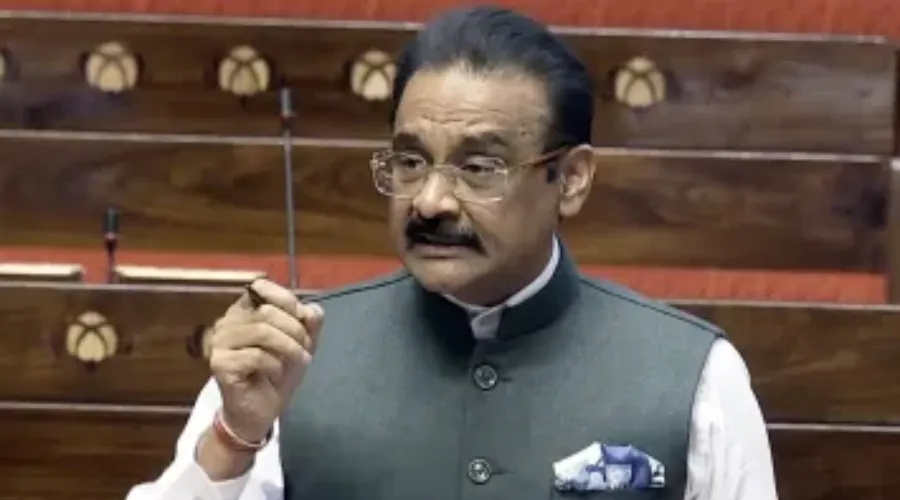
One of the most surprising aspects of this political development is the role of Ashok Mittal. Recently appointed by Arvind Kejriwal as the Deputy Leader of AAP in the Rajya Sabha—replacing Raghav Chadha—Mittal’s decision to join BJP has raised serious questions.
His sudden shift, coming so soon after being entrusted with a key leadership role, has added an unexpected twist to the story. It suggests that internal disagreements within AAP are not limited to a few individuals but may extend across different levels of leadership.
Reasons Behind the Exit
During the press conference, Raghav Chadha and other leaders did not hold back in expressing their concerns about the current direction of AAP. Chadha stated that the party has deviated from its founding principles of clean governance, transparency, and public service.
In a strong and symbolic statement, he described himself as “the right man in the wrong party,” indicating a fundamental mismatch between his values and the party’s current functioning.
The leaders claimed that their entry into politics was driven by a desire to serve the nation, not to pursue personal ambitions. However, over time, they felt that the party’s focus had shifted, making it difficult for them to continue without compromising their principles.
Also Read – IPL 2026: MS Dhoni Likely to Play Against Mumbai Indians, Big Boost for CSK
Constitutional Process Behind the Merger
The leaders emphasized that their move is in line with constitutional provisions. Under Indian law, if two-thirds of members of a legislative group agree, they can legally merge with another political party.
Chadha confirmed that the necessary documentation, including signatures from the MPs involved, has already been submitted to the Rajya Sabha Chairman. This ensures that the transition is not only politically significant but also legally valid.
Impact on AAP and BJP
This development is expected to have far-reaching consequences for both parties. For AAP, losing seven Rajya Sabha MPs in one move is a major blow. It weakens the party’s position in Parliament and raises serious questions about its internal cohesion.
For BJP, however, the move is a strategic gain. The addition of experienced leaders strengthens its presence in the Rajya Sabha and enhances its ability to push legislative agendas more effectively.
What This Means for Indian Politics
Beyond party-level implications, this development could influence the broader political landscape in India. A shift of this magnitude indicates changing alliances and evolving political strategies.
It also highlights the importance of internal party stability, as dissatisfaction among key leaders can lead to significant realignments. For voters and political observers, this serves as a reminder that party dynamics can change rapidly, especially in a competitive political environment.
Also Read – FFMIC 2026 Overview: ₹1 Crore Prize Pool & Champion Rush Format Explained for Grand Finals
Conclusion
The decision of Raghav Chadha and six other AAP Rajya Sabha MPs to join BJP marks one of the most significant political developments of 2026. With prominent figures like Ashok Mittal also making the switch, the situation underscores deeper issues within AAP.
While the leaders have justified their move as a step toward aligning with their values and continuing public service, the long-term impact of this shift remains to be seen. What is clear, however, is that this development has already reshaped the political narrative and will continue to influence discussions in the days to come.